New Delhi: A nation does not remember its history only through dates.
It remembers through images. Through words. Through songs and slogans. Through photographs that froze a moment forever. Through paintings born out of protest. Through newspapers that carried the mood of a country. And through ordinary objects that quietly became witnesses to extraordinary times.
It is this living, breathing memory of India that lies at the heart of SWARAJ: Revisualising India’s Political History, presented by The Tuli Research Centre for India Studies (T.R.I.S.) and curated by its founder, Neville Tuli.
Opening at the Visual Arts Gallery, India Habitat Centre, New Delhi, on August 12, 2026, SWARAJ revisits India’s journey towards political self-rule and self-discovery through rare artworks, photographs, books, prints, film publicity art, memorabilia and visual-textual-audio archives.
But this is not history meant to be viewed from a distance.
SWARAJ asks us to walk into it.
To look again at where we came from, what we fought for, what divided us, what united us — and perhaps, in the process, understand something about the India we inhabit today.
That idea forms the emotional core of the exhibition: history is not dead information. It continues to live among us and shape who we become.
The journey begins with early European coastal views of India and the intellectual awakening of the Bengal Renaissance before travelling to the First War of Independence in 1857.
From there, the story grows larger.
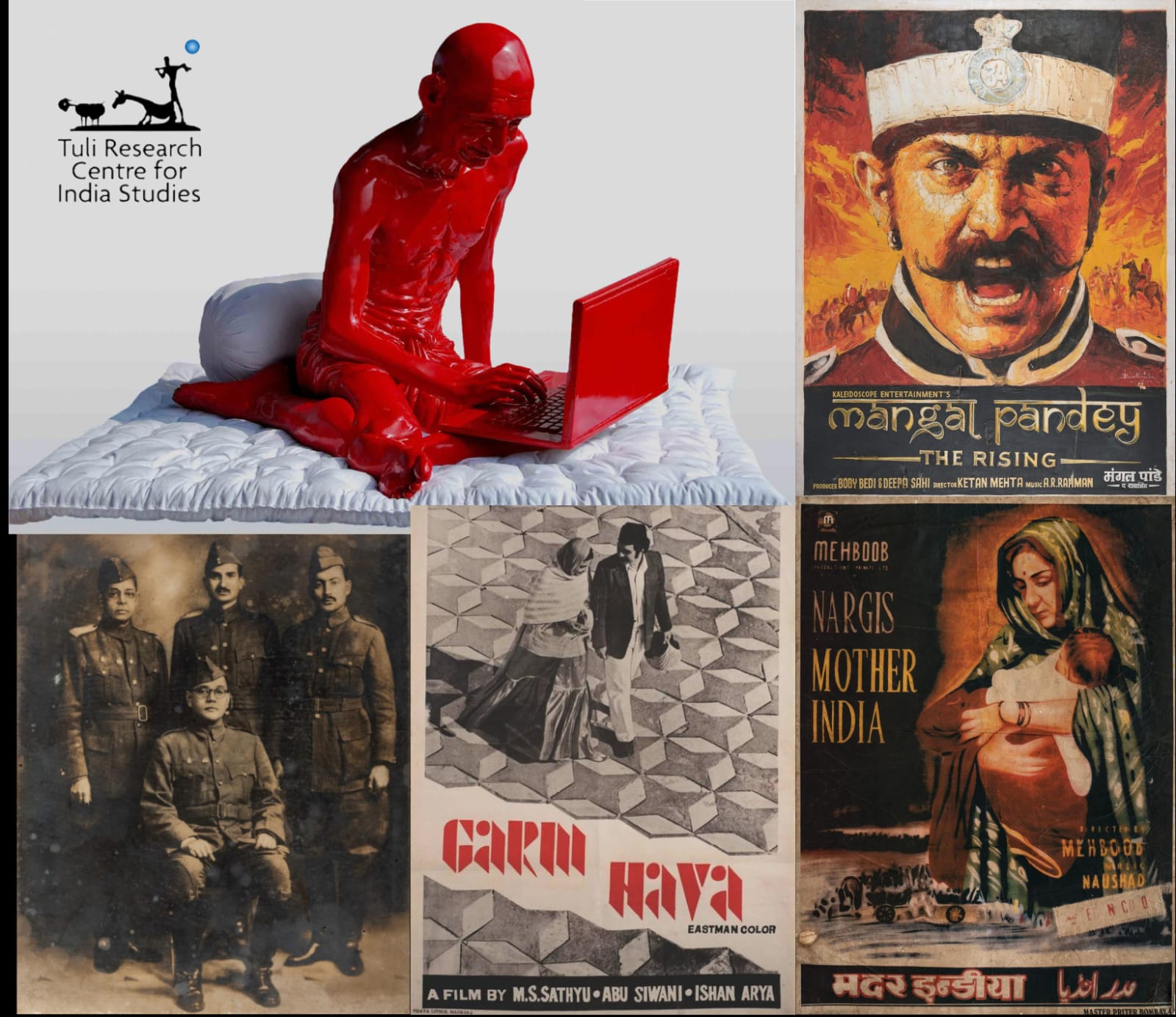
The rise of Indian printing presses. Political propaganda. Photojournalism. Cinema. Bharat Mata. Mother India. The changing Tiranga. And the extraordinary power of Mahatma Gandhi — not merely as a political leader, but as an image and an idea capable of mobilising millions.
There are the men and women whose names became inseparable from India's political awakening — Swami Vivekananda, Dadabhai Naorji, the Tagore family, Bal Gangadhar Tilak, Rash Behari Bose, Annie Besant, C. Rajagopalachari, Jawaharlal Nehru and Netaji Subhas Chandra Bose, among many others.
But SWARAJ does not romanticise the journey.
It also enters India's difficult memories — Partition, the making of the Constitution, integration of the princely states, the Emergency, wars, communal tensions and the protests and people's movements that repeatedly challenged the nation and changed its course.
For Neville Tuli, understanding political history also means looking beyond what conventional textbooks chose to preserve.
The media becomes a witness here.
Newspapers, journals and magazines sit alongside photographs by Felice Beato from 1858, images by Henri Cartier-Bresson from the final days of Gandhiji's life, and the work of Reuters photojournalists who stood amid the violence and protests of the 1980s and 1990s and recorded what they saw.
Art becomes another witness.
Works associated with Chittaprosad, Gobardhan Ash, Ramkinkar Baij, Qamarul Hassan, Somnath Khosa, Altaf, Prokash Karmakar, Vivan Sundaram and Sudhir Patwardhan reveal artists responding to the anxieties, injustices and transformations unfolding around them.
And sometimes history survives in the smallest things.
Among the exhibits are match-box tin covers carrying misprinted names of Swadeshi leaders from around 1921, Ramendranath Chakravorty's Gandhiji at Dandi, Chittaprosad's 1942 Quit India, photographs from the Madan Mahatta Archives and Gigi Scaria's Who Deviated First?
Perhaps the exhibition's most important conversation, however, is with a generation that did not live through these moments.
India's young.
SWARAJ draws a line between the questions, impatience, idealism and desire for change felt by young Indians today and those experienced by generations before them.
The faces change.
The times change.
The questions of freedom, identity, justice and belonging remain.
And suddenly history does not feel quite so old.
Fittingly, SWARAJ concludes with ‘Gandhiji in Contemporary India’, asking audiences to consider Gandhi's relevance in a country still negotiating dissent, democracy and its own evolving identity.
Ultimately, SWARAJ is not merely about looking back.
It is about looking at ourselves.
Because a nation's history is never only about what happened.
It is also about what we remember, what we forget, and what we choose to carry forward.
SWARAJ: Revisualising India’s Political History opens with a preview on Wednesday, August 12, 2026, at 6 PM and continues daily from 11 AM to 7 PM until Sunday, August 16, 2026, at the Visual Arts Gallery, India Habitat Centre, Lodhi Road, New Delhi. Entry is free and open to all.